English
  简体中文
简体中文 

Don’t Wait for a Lump: Why Breast Cancer Screening Matters Before Symptoms Appear
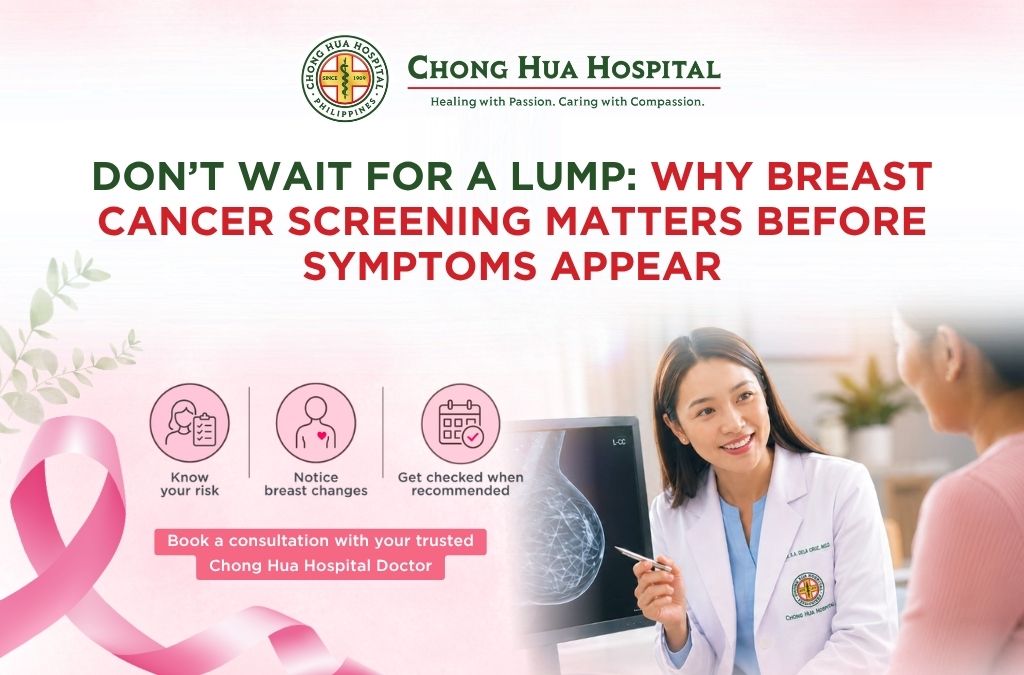
For many women, breast cancer becomes real only when something feels different—a lump, a change in the breast, unusual nipple discharge, or persistent discomfort. But breast cancer does not always begin with something you can feel.
That is why this Pink October, Chong Hua Hospital is reinforcing a simple but important message: Don’t wait for a lump. Breast Cancer Awareness Month is more than wearing pink or reminding women to perform breast checks. It is an opportunity for families and communities to understand that early detection, timely diagnosis, and access to appropriate treatment can change the course of the disease.
And in the Philippines, that message remains urgent.
Breast cancer remains the leading cancer among Filipino women
The newest estimates from the World Health Organization’s International Agency for Research on Cancer show that breast cancer remains the most commonly diagnosed cancer among women in the Philippines.
GLOBOCAN 2024 estimates, released in 2026, recorded approximately 28,124 new breast cancer cases in the Philippines, representing 31.7% of all cancers diagnosed among Filipino women. An estimated 11,160 deaths were attributed to breast cancer during the same period. Breast cancer also remained the most frequently diagnosed cancer across both sexes in the country.
Globally, the challenge is just as significant. WHO estimates that approximately 2.4 million women were diagnosed with breast cancer in 2024, while around 694,000 women died from the disease. Yet breast cancer outcomes differ greatly depending on how early the disease is detected and whether patients can access timely, complete treatment.
These numbers represent more than statistics. They represent mothers, daughters, sisters, colleagues, friends, employees, community leaders—and families whose lives can change with a single diagnosis.
Why “don’t wait for a lump” matters
A lump is one of the most recognized signs of breast cancer, but waiting for one before seeking care can mean losing valuable time. WHO emphasizes two important approaches to finding breast cancer earlier: early diagnosis, which means recognizing possible symptoms and seeking medical attention promptly, and screening, which looks for disease in people who may not yet have symptoms.
Breast cancer may also present through changes in breast size or shape, skin dimpling or redness, changes involving the nipple, thickening of breast tissue, or unusual or bloody nipple discharge. Importantly, breast cancer does not always cause pain in its early stages.
Early detection matters because cancers found before they have extensively spread generally provide more treatment options and better opportunities for successful management. WHO notes that cancer detected early is often more responsive to treatment and may require less complex or less intensive care than disease diagnosed at a more advanced stage. That is why breast health should not begin when something feels wrong. It should begin with knowing your individual risk and discussing the appropriate screening plan with a healthcare professional.
When should women start breast cancer screening?
There is no single screening schedule that applies identically to every woman. Age, family history, genetics, previous breast findings and other risk factors matter.
Current Philippine standards provide an important reference. Under PhilHealth’s quality standards for breast cancer screening, clinical breast examination is recommended beginning at age 25, with patient consent, while mammography is recommended every two years for women aged 40 to 69 who meet screening criteria. For selected high-risk women aged 40 to 69, breast ultrasound may also be recommended together with mammography. International recommendations similarly recognize the importance of screening beginning in the 40s. The U.S. Preventive Services Task Force, for example, currently recommends mammography every two years from ages 40 through 74 for women at average risk.
The most appropriate approach, however, is to talk to your doctor about when screening should begin for you, particularly if you have a strong family history of breast or ovarian cancer, previous abnormal breast findings, certain genetic risks, or other factors that may increase your risk.
Bringing breast screening closer to the community
Awareness alone cannot save lives if screening and follow-up care remain inaccessible. This is why improving access is an important part of Chong Hua Hospital’s breast health advocacy.
Both Chong Hua Hospital Cebu and Chong Hua Hospital Mandaue provide breast imaging services, including digital mammography with tomosynthesis and breast ultrasound. The hospital’s radiology service also supports the next steps in evaluating suspicious findings, including image-guided procedures and breast core needle biopsy when clinically indicated.
Mammography services are currently available at both hospital sites from Monday to Saturday, while breast ultrasound services are also available at the Cebu and Mandaue facilities according to published schedules. The goal is not simply to perform a test. It is to help create a pathway from screening to diagnosis, specialist consultation and, when needed, treatment and continuing support.
That continuity matters. WHO specifically recognizes timely diagnosis, comprehensive treatment and patient navigation as critical components of reducing breast cancer mortality.
Making screening more accessible through PhilHealth YAKAP
One important development for Filipino families is the expansion of preventive cancer services through PhilHealth YAKAP.
Chong Hua Hospital Cebu and Chong Hua Hospital Mandaue began offering eligible YAKAP beneficiaries outpatient cancer screening services, including mammography with zero cash out and no additional charges, subject to PhilHealth requirements and a Screening Test Request Form from a YAKAP-accredited physician.
Nationally, PhilHealth’s outpatient cancer-screening benefit currently provides coverage of ₱2,610 for screening mammography and ₱1,350 for breast ultrasound for qualified beneficiaries. This matters because financial barriers can cause women to postpone screening, diagnostic work-ups and treatment. PhilHealth reported that YAKAP had already expanded to 33.2 million Filipinos through 4,287 accredited clinics nationwide as of May 2026, strengthening access to primary care, diagnostics and outpatient cancer screening. For communities across Cebu and neighboring areas, connecting primary care, screening facilities and tertiary-level cancer services can make the difference between simply knowing that breast cancer exists and actually being able to act early.
Breast cancer is not only a women’s issue—it is a community issue
When a woman faces breast cancer, the impact rarely stops with the patient.
It can affect children, spouses, aging parents, workplaces and entire households. Treatment may require families to reorganize schedules, finances and caregiving responsibilities. For communities farther from specialized healthcare facilities, distance and access can add another layer of difficulty. This is why breast cancer awareness must move beyond telling women to “check for lumps.” We need to encourage women to attend regular checkups. We need families to support mothers and daughters in seeking medical advice instead of delaying because of fear.
Employers can promote preventive health programs. Healthcare institutions can strengthen referral pathways. Communities can help normalize conversations about breast health instead of allowing embarrassment or misinformation to become barriers to care.
Most importantly, no woman should assume that being healthy today means screening can always wait until tomorrow.
This Pink October, turn awareness into action
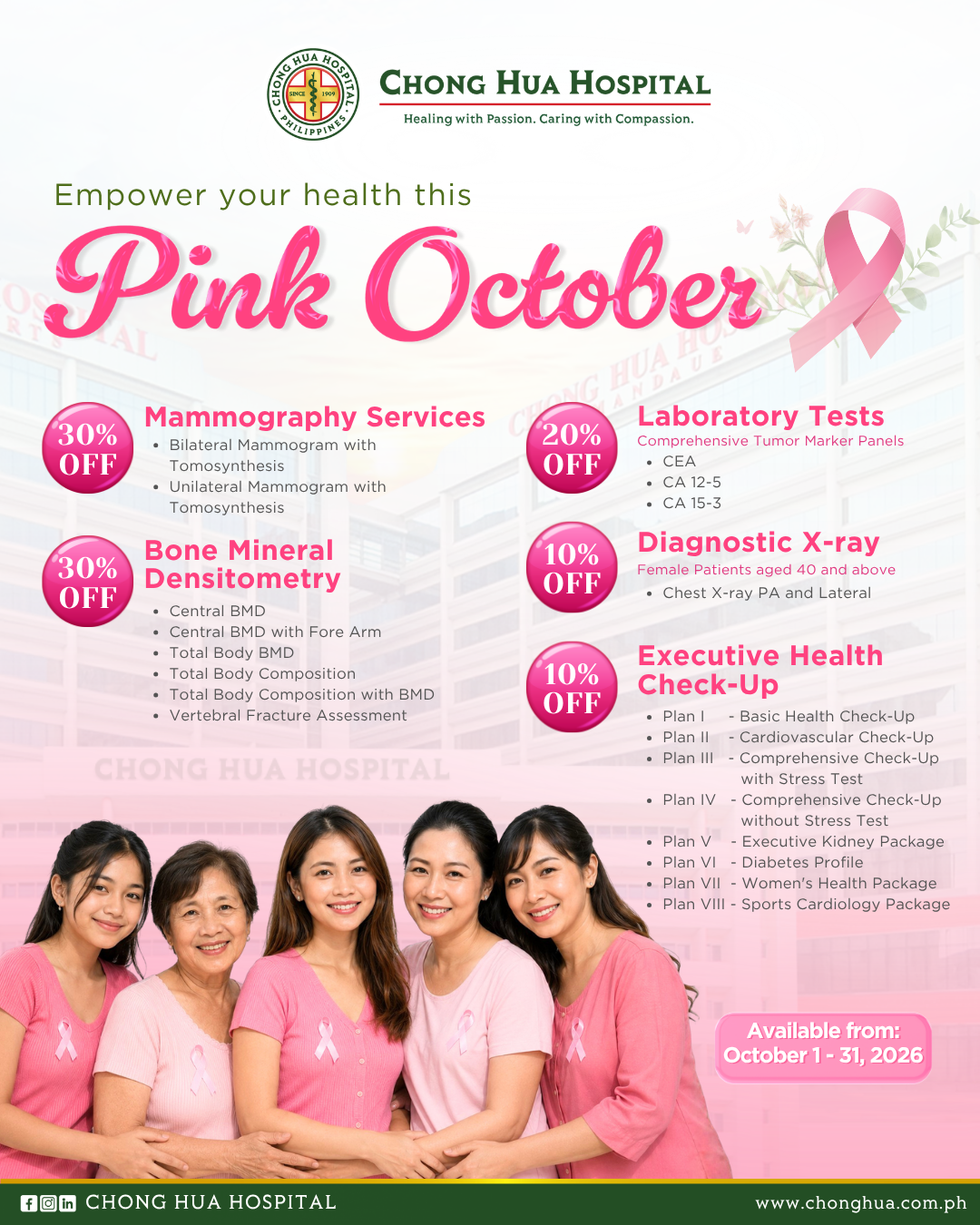
Pink October reminds us that breast cancer awareness has its greatest value when it leads to action. Know your breasts. Know your family history. Pay attention to changes. Keep your regular health appointments. Ask your doctor about your breast cancer risk and the screening schedule appropriate for you. And remember: you do not need to feel a lump before you start protecting your breast health.
At Chong Hua Hospital, breast cancer care begins before a diagnosis—with awareness, prevention and early detection—and continues through diagnostic evaluation, personalized treatment and support when they are needed. Because when breast cancer is concerned, earlier can make all the difference.
References
- Global Cancer Observatory. Philippines Fact Sheet — GLOBOCAN 2024.
https://gco.iarc.who.int/media/globocan/factsheets/populations/608-philippines-fact-sheet.pdf?sf188230821=1 - World Health Organization. Breast cancer.
https://www.who.int/news-room/fact-sheets/detail/breast-cancer - World Health Organization. Cancer.
https://www.who.int/news-room/fact-sheets/detail/cancer - PhilHealth. PC2025-0024 — Quality Standards for Breast Cancer Screening.
https://www.philhealth.gov.ph/circulars/2025/PC2025-0024.pdf - U.S. Preventive Services Task Force. Breast Cancer: Screening.
https://www.uspreventiveservicestaskforce.org/uspstf/document/ClinicalSummaryFinal/breast-cancer-screening - Chong Hua Hospital — Official Website. Service Offers / Price Lists.
https://chonghua.com.ph/service-offers-price-lists/ - Chong Hua Hospital — Official Website. Frequently Asked Questions.
https://chonghua.com.ph/frequently-asked-questions/ - World Health Organization. Guide to Cancer Early Diagnosis / Breast Cancer.
https://www.who.int/publications/i/item/9789240100954 - Chong Hua Hospital — Official Website. Chong Hua Hospitals Now Offer Free Cancer Screenings for PhilHealth YAKAP Beneficiaries.
https://chonghua.com.ph/announcement/chong-hua-hospitals-now-offer-free-cancer-screenings-for-philhealth-yakap-beneficiaries/ - PhilHealth. PC2025-0014 — Outpatient Cancer Screening Benefit.
https://www.philhealth.gov.ph/circulars/2025/PC2025-0014.pdf - PhilHealth. YAKAP Program Update, May 2026.
https://www.philhealth.gov.ph/news/up/article/2026/news_6a0ab07d0e298.php